Communication & Presentation
How to Prepare for a TED Talk: Lessons from the Best
How to prepare for a TED talk — the one-idea rule, the 18-minute constraint, the 5-act structure, and lessons from Sinek, Cuddy, and Robinson.
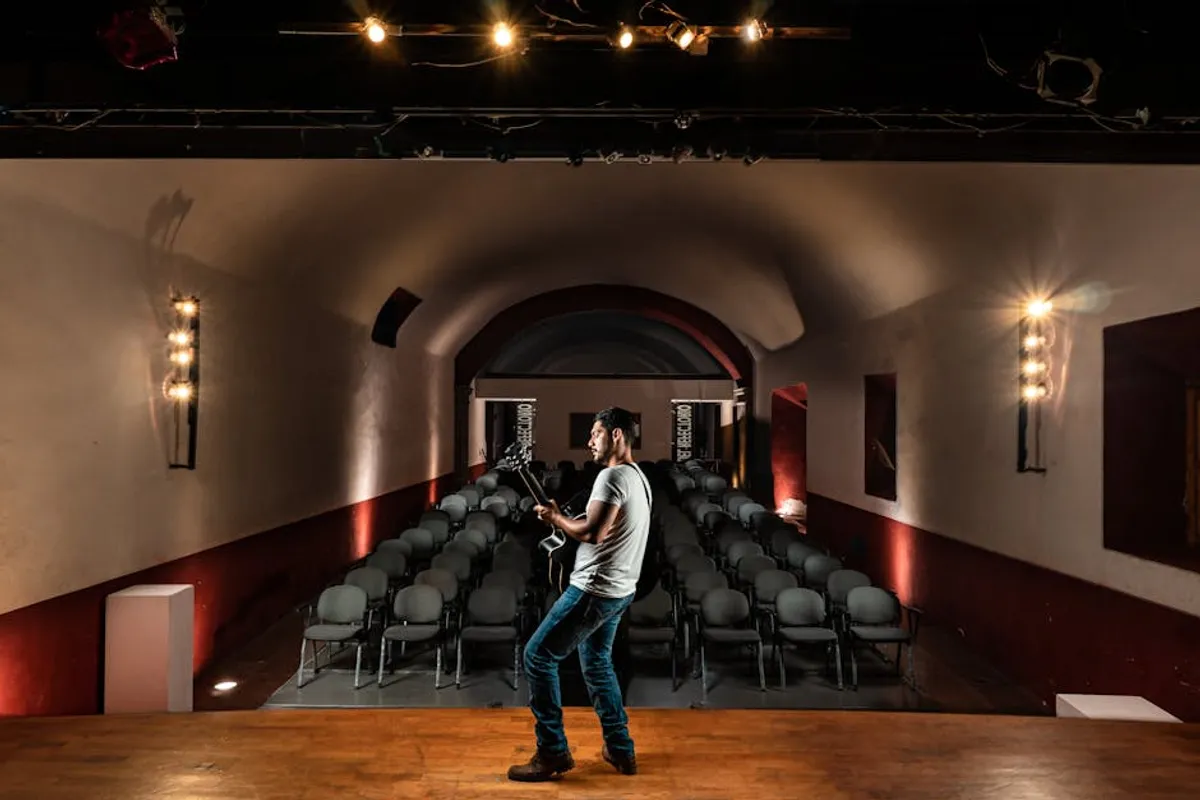
The three things that decide whether a TED-style talk lands or wanders: (1) one idea — not three, not five, one. (2) Compress to 18 minutes ruthlessly — the constraint is the creative engine. (3) Rehearse 50+ hours for an 18-minute talk; that ratio is what every successful TED speaker has paid. Skip any one and the format collapses. Patterns and structure below.
If you have ever wondered how a single 18-minute talk on stage can be more memorable than a 90-minute conference keynote — you have already noticed the format’s power. After 24 years of training working professionals in Singapore — including TEDx speakers, conference panelists, and corporate keynote speakers — I can tell you the TED format works because it imposes the constraint most corporate presenters lack: only one idea is allowed.
Here is a useful way to think about it. Preparing a TED talk is like writing a sonnet. Strict form. 14 lines. Specific rhyme. Within those constraints, infinite expression. Take the form away and you have free verse — looser, often weaker. The constraint isn’t the limitation; it’s the engine. This article gives you the form.
1. Why TED format is worth studying
You may never give a TED talk. The format is still worth studying. Three reasons:
- TED’s archive is the world’s largest library of dissectable presentations. Searchable, watchable, with view counts as a rough quality signal.
- The constraints are deliberate. 18 minutes, one stage, no podium, no scripted slides — these constraints surface what works and what doesn’t.
- The patterns transfer. Corporate audiences benefit from the same compression discipline that TED imposes — sometimes more obviously, since corporate audiences are even more time-poor.
After 24 years of training, I’ve watched the TED format quietly become the gold standard for any high-stakes 15-25 minute talk. The lessons in this article are extractable; you don’t need a red circle on stage to use them.
2. The one-idea rule
The single most important constraint in TED preparation. One idea per talk. Not your full expertise. Not your 5 frameworks. One.
The litmus test: if a friend who attended your talk had to summarise it to another friend in one sentence, what would they say? If you can’t predict the answer — and predict it being roughly right — you have more than one idea, and your talk will dilute itself.
Examples from well-known TED talks (paraphrased):
- Simon Sinek’s Start with Why — start with why, not what
- Amy Cuddy’s Power Posing — your body changes your mind
- Sir Ken Robinson’s Schools Kill Creativity — schools systematically educate creativity out of children
Each is one sentence, repeatable, memorable. Multiply your ideas; subtract until one remains. The remaining one becomes the talk.
The same one-idea discipline drives structuring a business presentation — pick the spine first; everything else hangs off it.
3. The 18-minute constraint
TED’s hard 18-minute limit is the format’s most under-appreciated tool. Within 18 minutes you can develop one idea fully, give it texture, land it. You cannot fit your full expertise. The constraint forces the compression.
The 18-minute psychological logic:
- Audience attention starts to drift past 20 minutes in most settings — TED’s limit sits just inside that ceiling.
- 18 minutes is enough for one idea, narrative arc included — opening, context, turn, conclusion.
- 18 minutes can be rehearsed to muscle memory — 60 minutes of content is too much for most speakers to commit to memory.
Translating to your context: if your slot is 30 minutes, target 22 minutes of content + 8 minutes of Q&A. If 45 minutes, 30 + 15. The 18-minute lesson isn’t the literal length; it’s the under-filling. Most corporate slots are over-filled. TED proves the value of going lighter.
4. The 5-act TED structure
Most viral TED talks follow some version of a 5-act structure. The acts vary in length; the order rarely does.
Act 1 — The Hook (60-90 seconds). A specific, surprising, or personal opening. “On a winter morning in 2010, my mother called me…” / “There are 7 billion people on this planet, and 3 billion of them…”
Act 2 — The Context (2-3 minutes). Why this matters now. The shared reality the audience needs before the idea makes sense.
Act 3 — The Journey (8-10 minutes). The arc of the idea. Often a story or a sequence of evidence. The longest act.
Act 4 — The Insight (2-3 minutes). The one idea, named explicitly. Often the moment that gets quoted afterwards.
Act 5 — The Ask (60-90 seconds). What you want the audience to do, think, or feel differently after walking out.
Within this structure, every successful TED talk fits. Your talk should too. Within each act, ruthless compression. The same destination-first discipline drives presenting to senior leadership — but at TED, the destination is the insight, not the ask.
5. Patterns from top TED speakers
Watching the most-viewed TED talks back-to-back surfaces consistent patterns:
| Pattern | Example | Application |
|---|---|---|
| Personal hook in Act 1 | Sinek opens with personal frustration; Cuddy with her car accident | Find the specific moment that connects the topic to you |
| One single chart, used cleanly | Hans Rosling’s bubble chart, used 4 times across the talk | Pick the one chart that anchors the data; reuse it |
| Vivid metaphor as carrier | Cuddy’s “fake it till you become it”; Sinek’s golden circle | Build one memorable metaphor; refer to it 3-5 times |
| Pause before the punch line | Robinson’s deliberate pauses — sometimes 2-3 seconds | Don’t fill silence; let the line breathe |
| Direct address — “you” | Almost all use second person | Speak to the audience, not at them |
| Heroic single number | Rosling’s specific country statistics | Pick the one number that lands the idea |
These aren’t gimmicks. They are the patterns of speakers who have rehearsed enough to know what works. The same patterns appear in Steve Jobs’s keynote technique — heroic numbers, single charts, deliberate pauses.
6. The rehearsal cadence
TED speakers consistently report 60-200 hours of preparation for an 18-minute talk. That is roughly 5-10 hours per finished minute. Most corporate speakers underestimate the work by an order of magnitude.
A realistic protocol for a TEDx-quality 18-minute talk:
| Phase | Hours | Activity |
|---|---|---|
| Idea selection | 5-10 | Test the one-idea against 3-5 different audiences informally |
| First draft | 5-10 | Write the talk verbatim. Most speakers cut 40% of it before delivery. |
| Structural revision | 5-10 | Map to the 5-act structure. Tighten each act. |
| Verbal rehearsal | 20-40 | Speak it aloud, on your feet, daily. Time each rep. |
| Recorded rehearsal | 10-20 | Record video. Watch back. Adjust. |
| Live rehearsals | 5-10 | In front of trusted listeners. Get feedback. |
| Final passes | 5-10 | Last week. Memorise the openings of each act. |
Total: 55-110 hours. Most successful TED speakers report the upper end of this range. The TED talks that go viral were not extemporaneous; they were the visible part of a long invisible rehearsal.
A pattern from the training room. I once worked with a TEDx speaker in Singapore preparing a 17-minute talk. She had rehearsed it 22 times by week 4 and felt ready. We watched the recording together. The talk was strong; one transition between Act 3 and Act 4 was weak. She protested another rehearsal pass — “it’ll be fine on the night.” We did the pass anyway. She caught a phrasing that made the talk land. After 24 years of training, the same lesson: the difference between a good TED talk and a great one is usually the rep you didn’t want to do. The 23rd rehearsal is where talks become memorable.
7. How to apply the TED format to a corporate talk
You may not get a TED slot. The format still upgrades your corporate presentations. Three immediate moves:
- Pick the one idea. For your next 30-minute corporate slot, pick one idea worth the audience remembering. Compress everything else into the appendix.
- Map to the 5-act structure. Hook, context, journey, insight, ask. Cut anything that doesn’t serve one of the five.
- Pre-build the metaphor. Find one vivid image — a sport, a craft, an everyday object — that carries the idea throughout.
Within 6 months of using these moves, your corporate presence shifts noticeably — even though you’ve never set foot on a TED stage. The same drill-then-deploy logic from building soft skills generally applies. Pick the format, use it consistently, and the compound shows up in 3-4 talks.
The natural sequence: find the one idea → compress to 18 minutes → map to 5 acts → build one carrier metaphor → rehearse 50+ hours if it’s a TED slot, 8-12 if it’s corporate → deliver, then debrief. Six steps. The work is concentrated; the impact compounds.
I hope you find one move in this article that fits the next talk on your calendar. Pick the smallest one — picking the one idea before doing any slide work — and try it. That is enough. The rest builds from there.
If you want a structured course where a trainer applies these techniques to your real talk, Delivering Impactful Business Presentations (WSQ) is the 2-day course version of this article. SkillsFuture credit eligible. For the confidence layer underneath, Communicate with Confidence (WSQ) is the natural pairing.
Hero and in-body images via Pexels.
Frequently asked
How long does it take to prepare a TED talk?
Top TED speakers report 60-200 hours of preparation for an 18-minute talk. The ratio is roughly 5-10 hours of rehearsal per minute of finished talk. Most TEDx speakers I've worked with in Singapore land around 80 hours total. Section 6 covers the rehearsal cadence.
What is the 18-minute rule for TED talks?
TED's official maximum is 18 minutes. The constraint forces compression — you have to drop everything that isn't the one idea. Most TED speakers report that the 18-minute limit is the single most useful creative constraint in the format. Section 3 covers it.
What makes a great TED talk?
One idea, executed cleanly. A 5-act structure (hook, context, journey, insight, ask). Heroic numbers and a clear single takeaway. Rehearsal volume that exceeds the speaker's comfort. Sections 4-5 cover the patterns from top speakers.
Can I apply TED-style techniques to a corporate presentation?
Yes. The one-idea rule, the 5-act structure, and the heroic-numbers discipline all transfer cleanly to corporate settings — sometimes more cleanly than to the TED stage itself. Section 7 covers the translation.
How do I get selected to speak at TEDx?
Three patterns I've seen work for TEDxSingapore and similar events. Have one specific, tested talk topic — not a general expertise area. Have evidence you can deliver — a recorded internal talk or industry panel. Approach the curator with a 1-page pitch focused on *the audience's takeaway*, not your CV.
Is there a course version of this article?
Yes — Delivering Impactful Business Presentations (WSQ) is the structured 2-day course where a trainer helps you compress and rehearse a TED-style talk. SkillsFuture credit eligible (see [SkillsFuture Singapore](https://www.skillsfuture.gov.sg/) for credit details). For confidence on stage, [Communicate with Confidence (WSQ)](https://www.trainingint.com/communicate-with-confidence) is the natural pairing.
About the author
Vinai Prakash
Founder & Principal Trainer, SoftSkills.sg
Vinai has trained 48,000+ working professionals across 12,600+ companies in Singapore over 24 years. He is ACTA-certified, holds a PMP, has an MBA in eCommerce, and authored Excel Crash Course (BPB Publications). All trainers at Intellisoft Training are ACTA or DACE certified with 20–25+ years of industry and teaching experience.
Related reading
More on communication
How to Build Confidence for Public Speaking: A 6-Week Ladder
How to build confidence for public speaking: a 6-week ladder protocol, body-before-mind physiology, the 60-second pre-talk ritual, and how to recover.
How to Communicate with Clients: 4 Phases, 6 Habits
How to communicate with clients across the full relationship — 4 phases (pitch, kickoff, delivery, renewal), 6 habits, and channel discipline.
How to Disagree at Work: 4 Scripts That Don't Burn Bridges
How to disagree at work without damaging the relationship — a 3-step structure plus 4 scripts (boss, peer, client, group meeting). Singapore tone-calibrated.
Want the full curriculum, outcomes and upcoming dates? See our Communicate With Confidence (WSQ) course page, or browse all soft skills courses.
Prefer hands-on coaching with live feedback in the room? Book the Communicate with Confidence (WSQ) — WSQ-funded and SkillsFuture-claimable, run by Vinai's training team.