Productivity & Thinking
How to Stop Procrastinating at Work: 3 Causes + 4-Week Plan
How to stop procrastinating at work — the 3 root causes (ambiguity, fear, low energy), the 5-minute start rule, and a 4-week protocol that sticks.
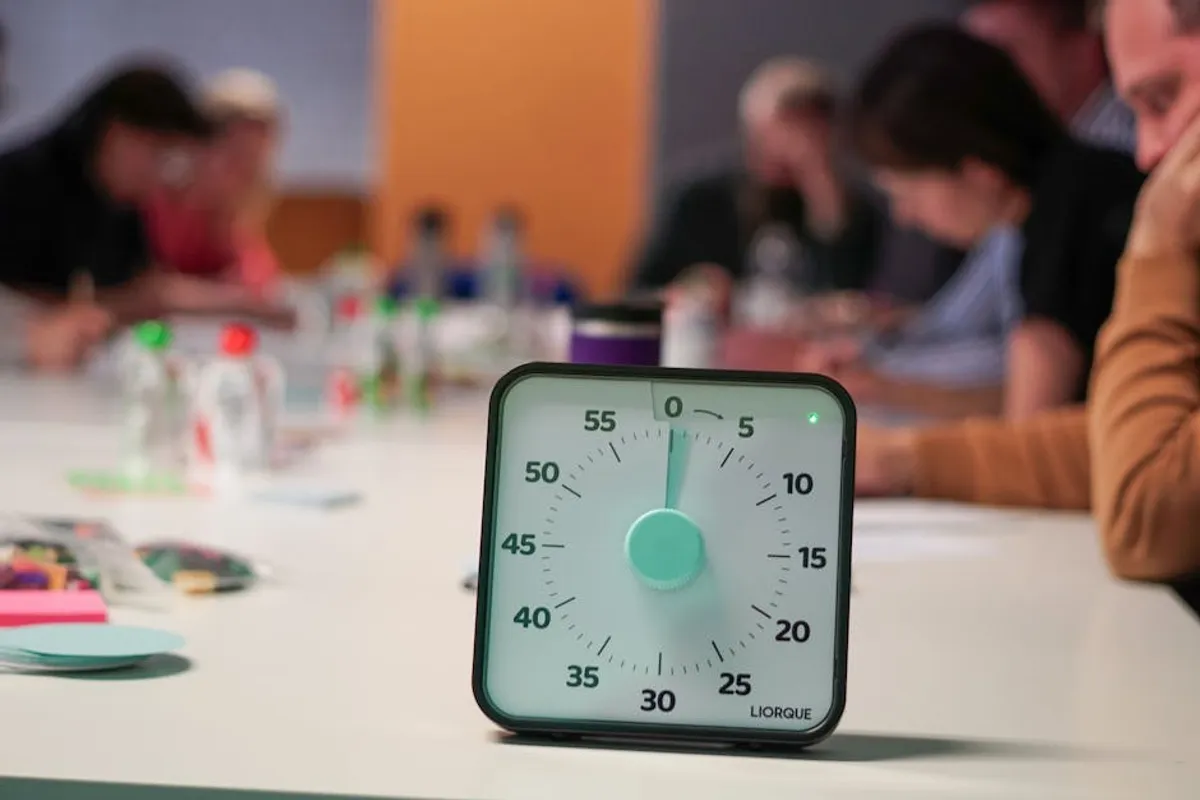
The three things that decide whether you actually beat procrastination or keep relapsing: (1) treat it as a signal, not a character flaw — the reframe is half the work. (2) Diagnose the root cause: ambiguity, fear, or low energy. The fix depends on the cause. (3) Use the 5-minute start rule — most procrastinated tasks are easier in motion than at rest. Skip any one and willpower alone keeps failing. Plan below.
If you have ever opened your laptop with a clear plan, ended the day having done five other things instead, and beaten yourself up about it — you have already met the procrastination loop. After 24 years of training working professionals in Singapore, I can tell you the gap between professionals who execute consistently and those who plateau is rarely effort. It is how they treat the moment of resistance.
Here is a useful way to think about it. Procrastination is like avoiding a cold pool. The resistance is at the edge, not in the water. You stand at the edge for 20 minutes, dreading the cold. Once you’re in, the cold is gone in 30 seconds. The skill is recognising the edge for what it is — and crossing it quickly. This article gives you the crossings.
1. Procrastination is a signal, not a character flaw
Most professionals treat procrastination as a personal failing — “I’m just lazy” or “I lack discipline.” This framing makes it harder to fix because it focuses on willpower, which is finite.
A more useful frame: procrastination is information. It tells you something specific about the task, your state, or your environment. Decode the signal and the fix becomes structural, not motivational.
After 24 years of training I see the same pattern. The professionals who execute consistently aren’t more disciplined. They’ve learned to read the resistance — and respond to what it’s telling them.
2. The 3 root causes
Three causes account for roughly 90% of work procrastination:
| Cause | What it feels like | What’s actually happening |
|---|---|---|
| Ambiguity | ”I don’t know where to start” | The task is poorly defined; next step unclear |
| Fear | ”I keep avoiding it” | The task is high-stakes; brain protects against perceived failure |
| Low energy | ”I just can’t” | Sleep, food, or recovery deficit; willpower drained |
Each cause has a different fix:
- Ambiguity — break the task down. Section 4.
- Fear — start with the smallest possible action. Section 3.
- Low energy — fix the energy first; don’t fight it. Section 7.
The same diagnostic-first approach drives prioritising tasks at work — work the diagnosis, not the symptom.
3. The 5-minute start rule
The single most useful procrastination move. Commit to 5 minutes on the task. That’s the entire commitment. After 5 minutes, you can stop.
Three things this does:
- Lowers the activation energy. 5 minutes is much smaller than “do the task.”
- Removes the dread of full commitment. You can quit guilt-free at minute 5.
- Most tasks are easier in motion. Once you’re 5 minutes in, continuing is usually easier than stopping.
In practice, professionals who use the 5-minute rule continue past 5 minutes about 80% of the time. The rule isn’t about doing 5 minutes — it’s about starting.
4. Breaking down the unbearable task
For ambiguity-driven procrastination, the fix is breaking the task down until the next step takes under 10 minutes.
Bad: “Write the Q3 report” (too vague, takes hours) Better: “Write the Q3 report’s executive summary” (still big) Best: “Open the Q3 report doc and write the first sentence of the exec summary” (10 minutes, specific, startable)
The skill is decomposing until the next step is actionable in your current state. Most professionals don’t decompose enough — and the unbroken-down task creates the ambiguity that fuels the procrastination.
The same decomposition logic drives setting concrete goals — outcomes are aspirational; next steps are executable.
5. Environmental redesign
For chronic procrastination, fix the environment, not yourself.
| Friction | Fix |
|---|---|
| Phone visible at desk | Put it in a drawer during focus blocks |
| Email open in browser | Close the tab during deep work |
| Slack notifications on | Set status to focusing; turn off non-urgent channels |
| Working in a noisy space | Dedicated quiet block in calendar; noise-cancelling headphones |
| Unclear next step at start of session | Define before you sit down; write it on a sticky |
| No deadline structure | Set artificial micro-deadlines |
Most professionals try to use willpower against environmental friction. Easier to redesign the environment once than to fight it daily. The same principle drives time management at work — calendar defence beats willpower every time.
6. The 4-week protocol
| Week | Focus |
|---|---|
| 1 | Diagnose — log what you procrastinate on and which root cause fits |
| 2 | 5-minute start rule on one task daily |
| 3 | Decompose two big tasks into under-10-min next steps |
| 4 | Redesign one environmental friction |
Four weeks. Compound effect by week 4 is usually a 50-70% reduction in procrastination on the targeted tasks.
A pattern from the training room. I once worked with a manager who described herself as a “chronic procrastinator.” We mapped what she actually procrastinated on. The pattern was clean — she procrastinated on tasks she found ambiguous, and only those. We rebuilt her morning routine around 10 minutes of decomposition before any deep work. Within a month she was no longer procrastinating; she was just doing the decomposition step everyone else skipped. After 24 years of training, the same lesson: procrastination is rarely random. Find the pattern and the fix follows.
7. When procrastination signals burnout
Sometimes procrastination isn’t about the task — it’s about you. Three signals:
| Signal | What it suggests |
|---|---|
| Procrastination across many tasks for weeks | Not task-specific; energy or motivation issue |
| Sleep / mood / appetite changes alongside | Burnout territory; talk to someone |
| Tasks that used to be easy now feel impossible | Capacity has dropped; rest, don’t push |
| Procrastination paired with shame spirals | The shame is itself draining recovery |
In these cases, willpower techniques won’t work and may make things worse. The fix is rest, recovery, and possibly professional support — not another productivity hack.
The same rest-and-recovery logic drives work-life balance — execution capacity isn’t infinite.
The natural sequence: diagnose the cause → 5-minute start for fear → decompose for ambiguity → rest for low energy → redesign environment for chronic patterns → escalate if it persists past 4-6 weeks.
Pick the smallest move — the 5-minute start on one task tomorrow morning — and try it. Time Management (WSQ) is the 2-day course version. SkillsFuture credit eligible.
Hero and in-body images via Pexels.
Frequently asked
Why do I procrastinate even on important tasks?
Procrastination signals one of three things — ambiguity (you don't know exactly what to do), fear (the task is high-stakes), or low energy (the task requires more than you have right now). Diagnose first; the fix depends on the cause. Section 2 covers it.
What's the 5-minute rule for procrastination?
Commit to working on the task for 5 minutes. Just start. Most procrastinated tasks are easier in motion than at the start; once you're 5 minutes in, continuing is much easier than not. Section 3 covers it.
How do I break down a task that feels too big?
Cut it down until the next step takes under 10 minutes. Most procrastinated tasks have a poorly-defined next step; defining one specific 10-minute action removes the ambiguity. Section 4 covers it.
Is procrastination a character flaw?
No — procrastination is a signal. It tells you something about the task (ambiguity), your state (fear, low energy), or your environment. Treating it as a character flaw is the wrong diagnosis. Section 1 covers the reframe.
When does procrastination signal something more serious?
When it persists across many tasks for many weeks, when the same task gets avoided repeatedly, or when it pairs with sleep / mood changes. That can signal burnout, not procrastination. Section 7 covers it.
Is there a course version of this article?
Yes — Time Management (WSQ) is the structured course covering procrastination, prioritisation, and execution. SkillsFuture credit eligible.
About the author
Vinai Prakash
Founder & Principal Trainer, SoftSkills.sg
Vinai has trained 48,000+ working professionals across 12,600+ companies in Singapore over 24 years. He is ACTA-certified, holds a PMP, has an MBA in eCommerce, and authored Excel Crash Course (BPB Publications). All trainers at Intellisoft Training are ACTA or DACE certified with 20–25+ years of industry and teaching experience.
Related reading
More on soft skills
How to Manage Time at Work: 8 Tactics for Singapore
How to manage time at work — 8 tactics for Singapore professionals: weekly review, time blocking, calendar defence, email batching, and focus blocks.
How to Prioritise Tasks at Work: 3 Methods + a Drop List
How to prioritise tasks at work — Eisenhower, ABC, and MIT methods compared, how to pick by the day you're having, plus the drop list of tasks to skip.
How to Say No to a Meeting Politely: 5 Decline Scripts
How to say no to a meeting politely — the agenda-and-outcome filter, 5 decline scripts, when declining is wrong, and a proxy alternative for packed calendars.
Want the full curriculum, outcomes and upcoming dates? See our Time Management (WSQ) course page, or browse all soft skills courses.
Want to build these habits with a trainer guiding you? Book the WSQ Time Management course — WSQ-funded and SkillsFuture-claimable, run by Vinai's training team.